
Soil Health: Understanding, Assessing and Managing the Living Soil
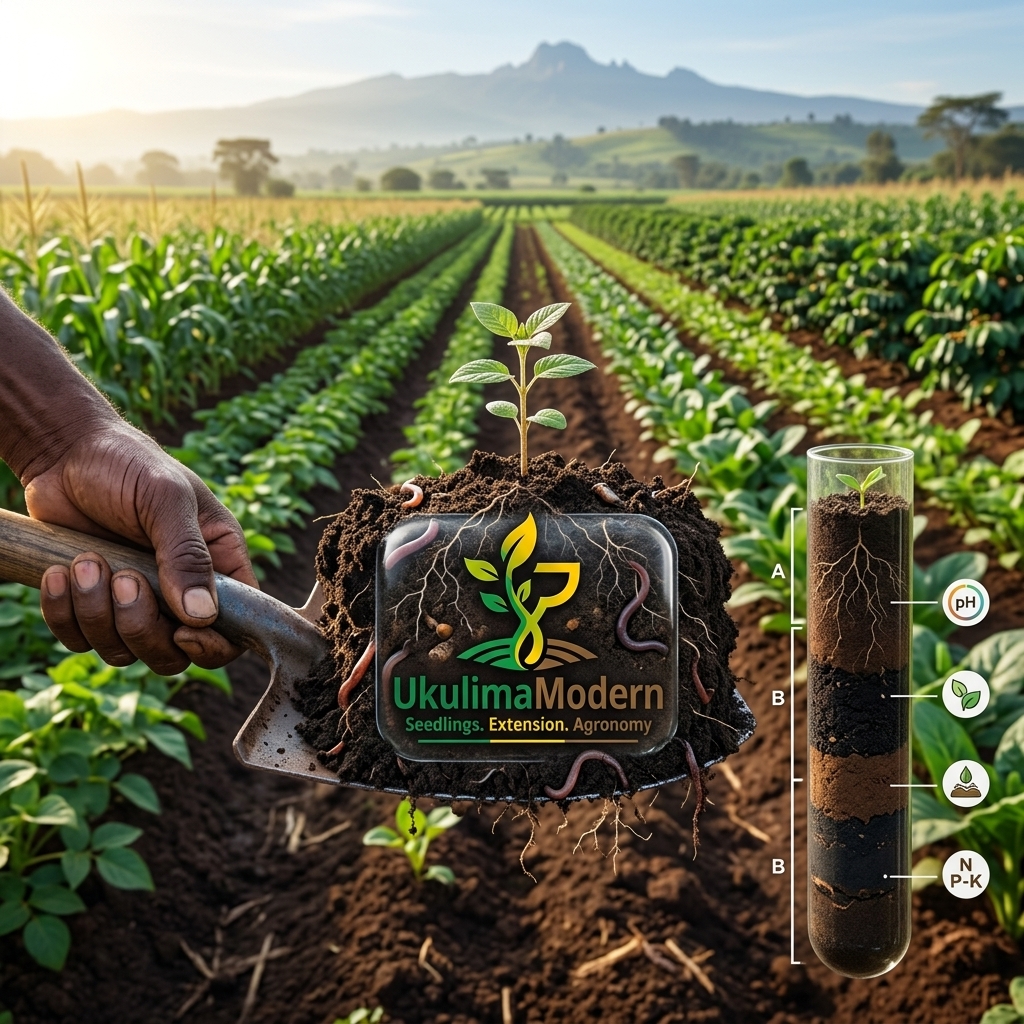
A farm’s productivity begins long before a crop is harvested. It begins beneath the crop. The soil supports roots, stores and moves water, cycles nutrients and provides habitat for an enormous community of organisms. How well these functions work together influences how crops establish, grow and respond to environmental stress. This is why soil health deserves attention beyond simply asking how much fertilizer is in the soil. A soil can contain nutrients and still have problems with: Soil health is therefore about how well the soil functions as a system. At UkulimaModern, soil health management forms part of a broader approach to sustainable farm productivity—connecting soil assessment, fertility management, crop nutrition, water management and appropriate agronomic practices. «Healthy soil is not simply soil with nutrients. It is soil that functions.» What Is Soil Health? Soil health refers to the capacity of soil to function effectively as a living ecosystem and support plant growth while maintaining its ability to perform essential functions over time. These functions include: Soil health is therefore broader than a single laboratory measurement. It is an interaction between the soil’s: Physical condition How the soil is structured and how water, air and roots move through it. Chemical condition The soil’s pH, nutrient status, salinity and other chemical properties. Biological condition The organisms and biological processes that contribute to nutrient cycling, decomposition and soil functioning. These three dimensions are interconnected. Soil Health vs Soil Fertility The terms are often used interchangeably, but they are not exactly the same. Soil fertility Generally concerns the soil’s capacity to supply nutrients required for plant growth. Soil health Takes a broader view of how well the soil functions physically, chemically and biologically. For example, a soil may have adequate phosphorus and potassium but still suffer from severe compaction. The nutrient levels may look acceptable, but roots may struggle to explore the soil. Similarly, a soil may contain sufficient nutrients but have poor organic matter and weak structure, resulting in poor water retention and infiltration. Therefore: «Soil fertility is part of soil health—but soil health is bigger than fertility.» The Three Dimensions of Soil Health A practical way to understand soil health is through three interconnected dimensions. This concerns the physical condition of the soil. Important characteristics include: This concerns the soil’s chemical environment. Important factors include: This concerns living organisms and biological processes within the soil. These include: A good soil-management programme should consider all three. Soil Structure Soil structure refers to how individual soil particles are arranged into aggregates. Good structure can support: Poor structure can result in: Compaction Compaction occurs when soil particles become compressed and pore spaces are reduced. This can be caused by: Compacted soil may restrict root growth and reduce movement of water and air. Field signs may include: Managing traffic, avoiding unnecessary soil disturbance and maintaining soil organic matter can help support better soil structure. Water Infiltration Healthy soil should allow water to enter the soil rather than simply running across the surface. Poor infiltration can lead to: Farmers can observe how quickly water enters the soil after rainfall or irrigation. Very rapid runoff may indicate a structural or surface-cover problem, although infiltration should ideally be assessed more systematically when making management decisions. Soil Erosion Erosion removes valuable topsoil. The topsoil often contains significant amounts of: Once this layer is lost, restoring the productive capacity of the land can be difficult and expensive. Signs of erosion may include: Protecting Soil From Erosion Depending on the farm and landscape, useful approaches can include: The appropriate method depends on slope, soil type, rainfall and farming system. Chemical health is more than NPK. A well-managed soil should have appropriate chemical conditions for the crop being grown. Important considerations include: pH Influences nutrient availability and other soil processes. Nutrient balance Plants require a range of nutrients, not simply nitrogen, phosphorus and potassium. EC / salinity Excess salts can affect plant water uptake and crop performance. Organic matter / carbon Contributes to soil structure, nutrient cycling and biological processes. This is why soil testing remains an important component of soil-health management. Soil pH and Soil Health Soil pH influences the chemical environment around plant roots. When pH is unsuitable for a particular crop, nutrient availability can be affected. Corrective measures may sometimes be required, but these should be based on appropriate assessment rather than simply applying lime or other amendments because a soil is suspected to be acidic. The principle is: «Test before correcting.» Nutrient Balance Matters Soil fertility is not about maximising every nutrient. Excessive levels of some nutrients can create imbalances and may interfere with the availability or uptake of others. For example, repeated application of one nutrient without considering the broader nutrient balance may not produce the desired crop response. A soil-health approach therefore considers: Availability + balance + crop demand + soil conditions. This is one of the most fascinating aspects of soil. Soil is alive. It contains communities of organisms involved in: These organisms include: Their activity contributes to the functioning of the soil ecosystem. Organic Matter: Fuel for the Soil System Organic matter is one of the most important components of healthy soil. It can contribute to: Sources may include: However, simply adding large quantities of organic material is not automatically beneficial. Quality, maturity, nutrient composition, application rate and decomposition characteristics matter. Soil Microorganisms and Nutrient Cycling Microorganisms contribute to the transformation and cycling of nutrients within the soil. Some organisms decompose organic materials. Others interact with plant roots. Certain microorganisms can contribute to processes involved in nutrient availability. This means soil management should consider not only what is added to the soil, but also whether the management system supports the biological processes that make those resources useful. Earthworms and Soil Health Earthworms can contribute to soil structure and organic-matter decomposition. Their activity can create channels through which: Finding earthworms can therefore provide one useful field observation of biological activity. However, the absence or presence of earthworms alone should not be used as a