
Site & Farm Assessment: Understanding Your Land Before You Invest
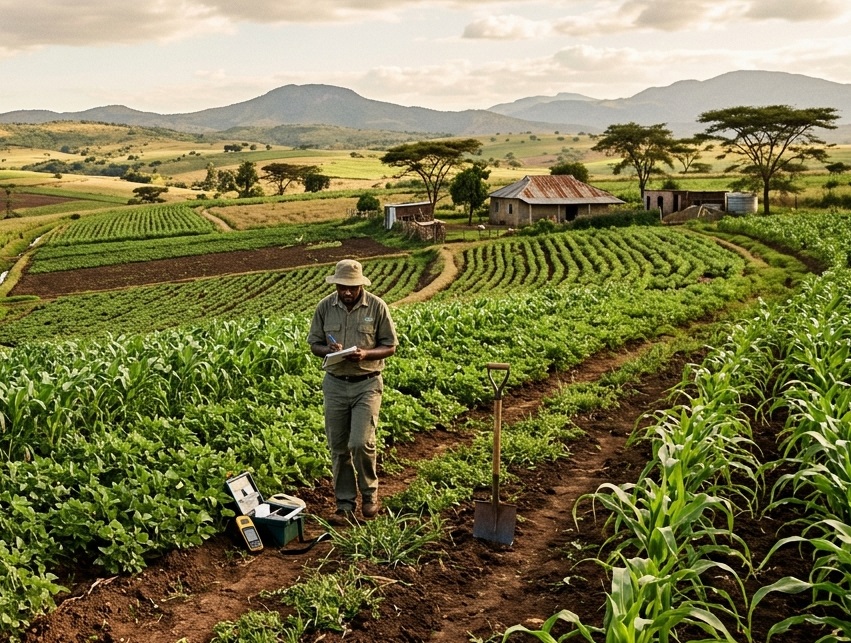
A successful farm starts with more than good planting material. Before selecting a crop, ordering seedlings, installing irrigation or investing in farm infrastructure, it is important to understand the land on which the enterprise will be established. This is where site and farm assessment comes in. A farm may appear suitable at first glance, yet important factors such as soil variability, drainage, water availability, slope, previous land use, accessibility and climate can significantly influence what can be produced and how profitably it can be produced. At UkulimaModern, site assessment forms part of a broader farm and project feasibility process designed to help farmers make informed decisions before committing significant resources. «Understand the site first. Then design the farm around it.» What Is a Site and Farm Assessment? A site and farm assessment is a structured evaluation of the physical, environmental and operational characteristics of a farm or proposed agricultural project. It helps answer practical questions such as: The assessment is therefore not simply a farm visit. It is the information-gathering stage that supports better farm design and management decisions. Why Assess a Farm Before Establishment? Agricultural investments can involve significant amounts of money. A farmer may invest in: If an important site constraint is discovered only after these investments have been made, correcting it can become expensive. A site assessment helps identify such issues earlier. For example, a proposed orchard may be affected by: Identifying these conditions early allows the farmer to adapt the project before establishment. The first part of an assessment should not necessarily be the soil. It should be the purpose of the project. Before examining the land, understand what the farmer wants to achieve. For example: The same piece of land can support different enterprises, but the appropriate choice depends on the farmer’s objectives and available resources. Important questions include: What is the expected scale? A one-acre family enterprise requires a different approach from a 20-acre commercial project. What is the investment capacity? Infrastructure and crop requirements must match available capital and working capital. What is the expected timeline? Annual crops, perennial crops and long-term agroforestry investments have very different financial timelines. Who will manage the farm? The technical requirements of an enterprise must be matched with management capacity. The location of a farm influences both production and business operations. During an assessment, consider: Accessibility becomes particularly important for commercial horticulture. A farm may produce a high-value crop, but poor road access can increase: Therefore: «Farm location is both a production consideration and a business consideration.» Walk the farm. Observe its shape and elevation. Important features include: Topography affects: A sloping farm, for example, may require additional measures to reduce erosion and manage water movement. A low-lying section may have different drainage characteristics from a higher section. This means a farm should not automatically be treated as one uniform production block. Water is essential for agriculture. But too much water in the wrong place can be just as problematic as too little water. Look for evidence of: Poor drainage can affect root development and increase the risk of certain crop problems. Before establishing a perennial crop such as an orchard, drainage conditions should therefore be understood carefully. Visual soil assessment can provide useful initial information, but it should not replace laboratory testing. Observe: These observations can help identify areas requiring further investigation. The next stage is representative soil sampling and laboratory testing. This is why site assessment naturally leads into our next technical guide: Soil Sampling, Testing and Analysis Laboratory results can provide information on characteristics such as: The results then need to be interpreted in relation to the intended crop and production system. Never assume that visible water automatically means adequate irrigation water. A proper assessment should consider: Source Where does the water come from? Possible sources include: Quantity Is enough water available for the proposed enterprise? Reliability Will the source remain available during dry periods? Quality Is the water appropriate for the crop and irrigation system? Distribution How will water move from the source to the crop? This may require: Where irrigation is planned, water quality assessment can be important because characteristics such as salinity and pH may affect crops and irrigation infrastructure. The current condition of the land is only part of the story. Ask about its history. Previous crops What has been grown on the land? Previous inputs Were fertilizers, herbicides or pesticides regularly applied? Livestock Has the land been used for grazing or livestock production? Previous problems Have farmers experienced: Land-use changes Has the land recently been cleared, cultivated or converted from another use? Farm history can provide clues that may not be visible during a single visit. Document what is already available. This can include: Then ask: «What can be retained, what needs improvement, and what needs to be built from scratch?» This prevents the project budget from being based on assumptions. One of the most useful outcomes of a good site assessment is recognising that not every part of the farm necessarily needs to be managed in exactly the same way. A farm can be divided into zones based on differences in: For example: Zone A: Well-drained, relatively level area Zone B: Sloping area requiring erosion management Zone C: Low-lying area with drainage concerns Zone D: Area requiring additional soil investigation Such zoning can later support: Even within the same broad geographical region, farm conditions can vary. Observe factors such as: For perennial crops, these considerations can influence long-term performance. Where relevant, historical climate and weather information should complement observations made during the farm visit. A common mistake is to decide on the crop first and then attempt to force the site to accommodate it. A better approach is: Understand the site → identify opportunities and constraints → evaluate possible enterprises → select the appropriate enterprise. Consider: Technical suitability Can the crop grow and perform adequately? Resource requirements Can the farm provide the required: Market opportunity Is there a realistic market? Financial requirement Can the farmer sustain the
Farm / Project Feasablitly
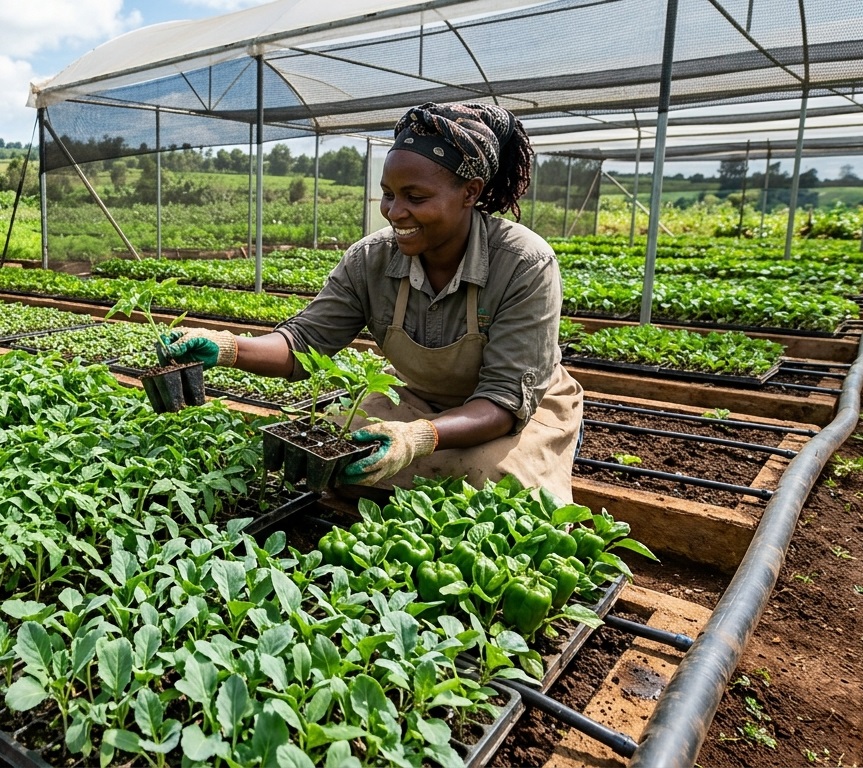
Project feasibility includes soil, water and site assessment before investment, follo farm planning and a cycle of Discover → Design → Visit → Support → Follow-up. Farm & Project Feasibility Before You Invest, Assess A practical guide to evaluating an agricultural enterprise before committing land, money and resources Introduction A farm project should not begin with a seedling order. It should begin with a question: «Is this farm, site and proposed enterprise actually suitable for what we intend to do?» Agriculture involves biological, environmental and financial uncertainty. Land may look productive but have hidden soil constraints. Water may be available but unsuitable for irrigation. A crop may have an attractive market but be poorly suited to the site’s climate. A farmer may have enough land but insufficient infrastructure, labour or working capital to manage the enterprise effectively. This is where farm and project feasibility assessment comes in. At UkulimaModern, feasibility is part of the process of understanding the farm before recommending what should happen on it. Our extension model begins by learning the farm — including soil, crops, water and farmer goals — before designing an appropriate intervention. The principle is simple: «Don’t start by asking, “What can I plant here?”Start by asking, “What does this site allow us to do sustainably and profitably?”» Farm feasibility is the process of assessing whether a proposed agricultural enterprise is technically, environmentally and economically viable under the conditions of a particular site. A feasibility assessment can be undertaken for: The assessment helps answer five fundamental questions: One of the most expensive mistakes in agriculture is starting before assessing. Farmers can spend significant amounts on: only to discover later that a fundamental constraint was overlooked. For example: A farmer may establish an orchard only to discover that the soil has a major fertility constraint. Another may install irrigation without adequately considering water quality or drainage. Another may select a crop because of its market price without adequately evaluating whether the local climate, soil, water and management requirements are suitable. Feasibility does not eliminate agricultural risk. It helps identify and manage risk before more money is committed. We can think of farm feasibility as six interconnected questions: SITE What is the land like? SOIL Can the soil support the proposed enterprise? WATER Is sufficient and suitable water available? CROP / ENTERPRISE Is the proposed enterprise appropriate for the site? MARKET Who will buy the output and under what conditions? MONEY Can the farmer finance establishment and manage the enterprise until returns begin? These are not independent questions. They interact. A crop may have a strong market but require irrigation that the farm cannot sustainably provide. A site may have excellent soil but poor market access. An enterprise may have good technical potential but require more working capital than the farmer can sustain. A good feasibility assessment therefore looks at the whole system. Before assessing the land, understand what the project is trying to achieve. Ask: A technically suitable project can still fail if it does not fit the farmer’s objectives, capacity or resources. The physical site is the foundation of the project. A basic site assessment should consider: Location Where is the farm? Consider: Topography Assess: Land history Understand what has previously happened on the land. Ask: Land history can reveal risks that are not immediately visible. Water is often treated simply as: «“There is a river.”» That is not enough. A proper assessment should consider: Availability Is water available throughout the production cycle? Quantity Is there enough water for the proposed enterprise? Reliability Will the source remain available during dry periods? Quality Is the water suitable for the intended crop and irrigation system? Infrastructure What will be required to: UkulimaModern’s agronomy services include water testing to assess irrigation water quality, pH, salinity and potential risks to irrigation infrastructure. This is where feasibility moves from visual observation to evidence. A basic soil assessment should eventually answer questions about: This is why soil sampling, testing and analysis comes immediately after the feasibility/site assessment stage in our knowledge series. A soil test can help determine what the soil currently contains and identify potential constraints, but the result still needs to be interpreted against the proposed crop and production objective. UkulimaModern’s current agronomy service includes laboratory soil analysis covering pH, EC, organic matter and macro- and micronutrient profiles. A crop does not grow in isolation from its environment. Consider: The question should not simply be: «“Can this crop grow here?”» It should be: «“Can this crop perform consistently here under the resources and management available?”» This distinction is particularly important for commercial projects. Only after understanding the site should crop or enterprise selection become a serious discussion. The assessment should consider: Site suitability + farmer objectives + available resources + management capacity + market opportunity + financial requirements. For example, two farmers may have similar acreage but completely different enterprise opportunities because their: are different. There is therefore no universally “best crop.” There is a more appropriate enterprise for a particular situation. Production without a market is a major business risk. Before establishing a commercial enterprise, investigate: Market feasibility should not mean simply asking: «“How much does this crop sell for?”» The more useful question is: «“Can this farm consistently produce a marketable product at a cost that allows the enterprise to remain viable?”» The project may require: Each requirement should be identified before establishment. UkulimaModern’s farm-planning service includes layout, field design, irrigation infrastructure design and cost budgeting. Agriculture is not simply about land. It is also about management. Ask: A farm can have excellent soil and good seedlings and still underperform because management is inadequate. This is where the project moves from: “Can we grow it?” to: “Can we afford to grow it?” Estimate: Establishment costs Operating costs Working capital How much money is required before the enterprise begins generating meaningful revenue? This is particularly important for perennial crops. An orchard may require substantial investment long before the farmer receives significant commercial returns. Every agricultural project