
Unlocking Maximum Yields: A Guide to Irrigation for Kenyan Farmers
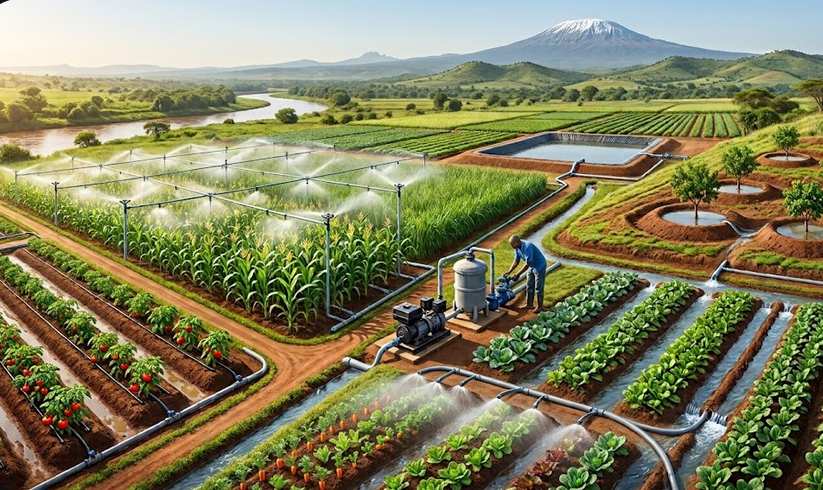
In Kenya, agriculture remains the backbone of our economy and the primary source of livelihood for millions. However, relying solely on rain-fed agriculture has become increasingly risky due to unpredictable weather patterns, prolonged droughts, and climate change. To achieve consistent production, high-quality harvests, and maximum profitability, adopting smart irrigation methods is no longer an option—it is a necessity. Why Invest in Irrigation? Key Benefits for Kenyan Agriculture Common Types of Irrigation Systems in Kenya Choosing the right irrigation method depends on your water source, land topography, crop type, and budget. Here is an overview of the main systems used across Kenya: 1. Drip Irrigation (Micro-Irrigation) 2. Drip Tape / Rain Hose (Sprinkler & Hose Systems) 3. Overhead Sprinkler Irrigation 4. Basin and Furrow Irrigation (Surface Irrigation) Best Practices for Successful Irrigation in Kenya At Ukulima Modern, we empower farmers with high-quality, disease-resistant seedlings, agronomy advisory, and modern farm setup services. Pair the right irrigation system with certified seedlings to get the best return on your investment!
Soil Health: Understanding, Assessing and Managing the Living Soil
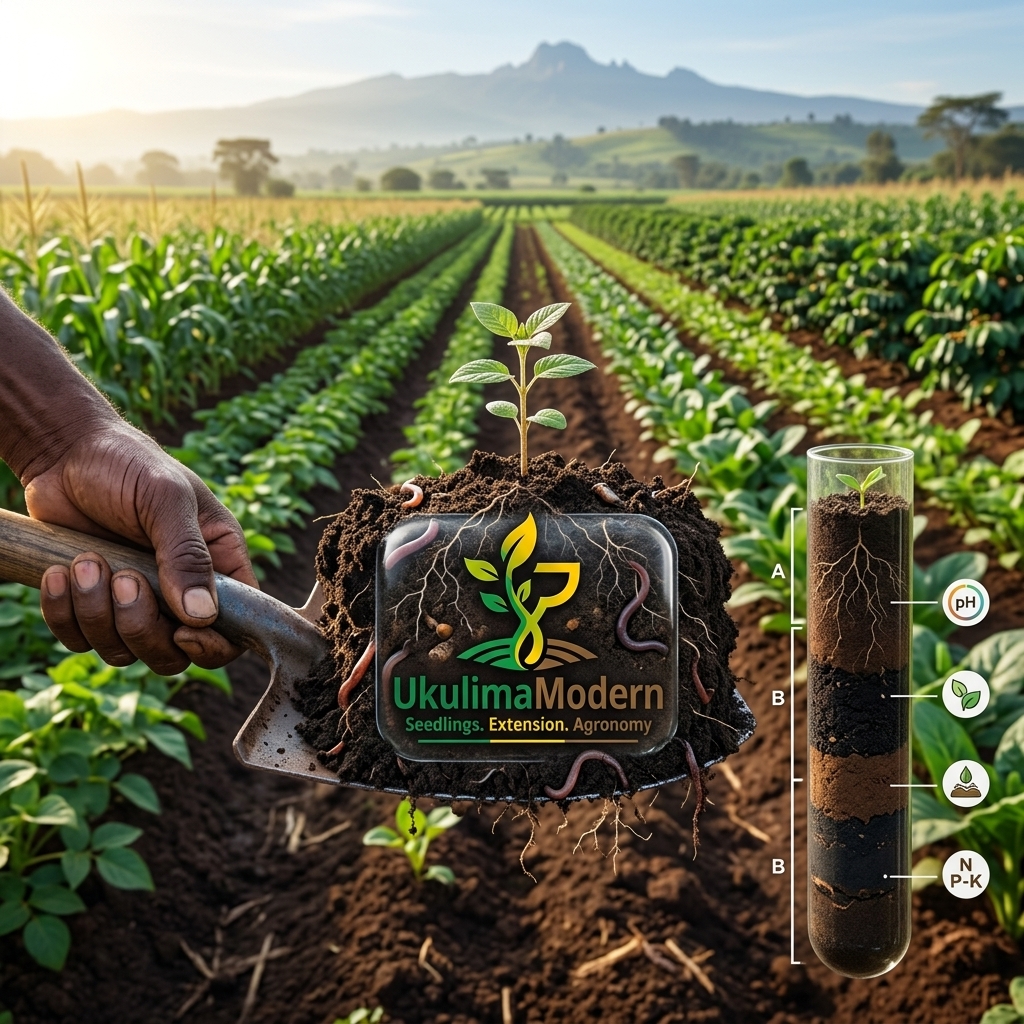
A farm’s productivity begins long before a crop is harvested. It begins beneath the crop. The soil supports roots, stores and moves water, cycles nutrients and provides habitat for an enormous community of organisms. How well these functions work together influences how crops establish, grow and respond to environmental stress. This is why soil health deserves attention beyond simply asking how much fertilizer is in the soil. A soil can contain nutrients and still have problems with: Soil health is therefore about how well the soil functions as a system. At UkulimaModern, soil health management forms part of a broader approach to sustainable farm productivity—connecting soil assessment, fertility management, crop nutrition, water management and appropriate agronomic practices. «Healthy soil is not simply soil with nutrients. It is soil that functions.» What Is Soil Health? Soil health refers to the capacity of soil to function effectively as a living ecosystem and support plant growth while maintaining its ability to perform essential functions over time. These functions include: Soil health is therefore broader than a single laboratory measurement. It is an interaction between the soil’s: Physical condition How the soil is structured and how water, air and roots move through it. Chemical condition The soil’s pH, nutrient status, salinity and other chemical properties. Biological condition The organisms and biological processes that contribute to nutrient cycling, decomposition and soil functioning. These three dimensions are interconnected. Soil Health vs Soil Fertility The terms are often used interchangeably, but they are not exactly the same. Soil fertility Generally concerns the soil’s capacity to supply nutrients required for plant growth. Soil health Takes a broader view of how well the soil functions physically, chemically and biologically. For example, a soil may have adequate phosphorus and potassium but still suffer from severe compaction. The nutrient levels may look acceptable, but roots may struggle to explore the soil. Similarly, a soil may contain sufficient nutrients but have poor organic matter and weak structure, resulting in poor water retention and infiltration. Therefore: «Soil fertility is part of soil health—but soil health is bigger than fertility.» The Three Dimensions of Soil Health A practical way to understand soil health is through three interconnected dimensions. This concerns the physical condition of the soil. Important characteristics include: This concerns the soil’s chemical environment. Important factors include: This concerns living organisms and biological processes within the soil. These include: A good soil-management programme should consider all three. Soil Structure Soil structure refers to how individual soil particles are arranged into aggregates. Good structure can support: Poor structure can result in: Compaction Compaction occurs when soil particles become compressed and pore spaces are reduced. This can be caused by: Compacted soil may restrict root growth and reduce movement of water and air. Field signs may include: Managing traffic, avoiding unnecessary soil disturbance and maintaining soil organic matter can help support better soil structure. Water Infiltration Healthy soil should allow water to enter the soil rather than simply running across the surface. Poor infiltration can lead to: Farmers can observe how quickly water enters the soil after rainfall or irrigation. Very rapid runoff may indicate a structural or surface-cover problem, although infiltration should ideally be assessed more systematically when making management decisions. Soil Erosion Erosion removes valuable topsoil. The topsoil often contains significant amounts of: Once this layer is lost, restoring the productive capacity of the land can be difficult and expensive. Signs of erosion may include: Protecting Soil From Erosion Depending on the farm and landscape, useful approaches can include: The appropriate method depends on slope, soil type, rainfall and farming system. Chemical health is more than NPK. A well-managed soil should have appropriate chemical conditions for the crop being grown. Important considerations include: pH Influences nutrient availability and other soil processes. Nutrient balance Plants require a range of nutrients, not simply nitrogen, phosphorus and potassium. EC / salinity Excess salts can affect plant water uptake and crop performance. Organic matter / carbon Contributes to soil structure, nutrient cycling and biological processes. This is why soil testing remains an important component of soil-health management. Soil pH and Soil Health Soil pH influences the chemical environment around plant roots. When pH is unsuitable for a particular crop, nutrient availability can be affected. Corrective measures may sometimes be required, but these should be based on appropriate assessment rather than simply applying lime or other amendments because a soil is suspected to be acidic. The principle is: «Test before correcting.» Nutrient Balance Matters Soil fertility is not about maximising every nutrient. Excessive levels of some nutrients can create imbalances and may interfere with the availability or uptake of others. For example, repeated application of one nutrient without considering the broader nutrient balance may not produce the desired crop response. A soil-health approach therefore considers: Availability + balance + crop demand + soil conditions. This is one of the most fascinating aspects of soil. Soil is alive. It contains communities of organisms involved in: These organisms include: Their activity contributes to the functioning of the soil ecosystem. Organic Matter: Fuel for the Soil System Organic matter is one of the most important components of healthy soil. It can contribute to: Sources may include: However, simply adding large quantities of organic material is not automatically beneficial. Quality, maturity, nutrient composition, application rate and decomposition characteristics matter. Soil Microorganisms and Nutrient Cycling Microorganisms contribute to the transformation and cycling of nutrients within the soil. Some organisms decompose organic materials. Others interact with plant roots. Certain microorganisms can contribute to processes involved in nutrient availability. This means soil management should consider not only what is added to the soil, but also whether the management system supports the biological processes that make those resources useful. Earthworms and Soil Health Earthworms can contribute to soil structure and organic-matter decomposition. Their activity can create channels through which: Finding earthworms can therefore provide one useful field observation of biological activity. However, the absence or presence of earthworms alone should not be used as a
Soil Sampling, Testing & Analysis
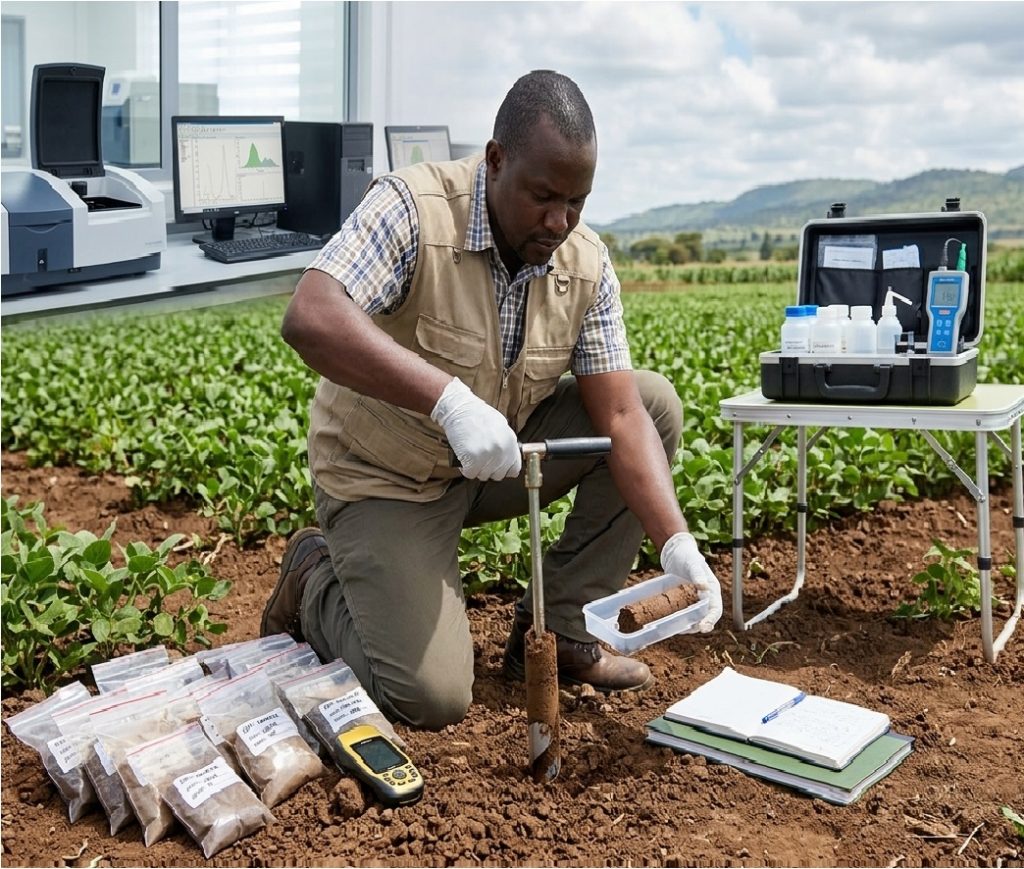
Building the Foundation for Better Soil Health Management By UkulimaModern | Seedlings. Extension. Agronomy. Good farming starts with good decisions. And good soil-management decisions start with understanding what is happening beneath the surface. Soil may look fertile, crops may appear healthy, or a farmer may have used the same fertilizer for years. But visual observation alone cannot provide a complete picture of soil fertility and soil health. Soil sampling, testing and analysis provide the evidence needed to understand the condition of the soil and make better management decisions. At UkulimaModern, we approach soil assessment as more than simply sending soil to a laboratory. The objective is to move from sampling to understanding, and from understanding to action. Why Soil Sampling and Testing Matter Soil is one of the most important assets on a farm. It provides the environment in which roots develop and supplies plants with water and nutrients. It also supports biological activity and influences how efficiently crops can access available nutrients. However, soil conditions can vary: A fertilizer programme that works in one field may therefore not be appropriate for another. Similarly, applying more fertilizer does not necessarily solve poor crop performance. The first question should be: «What does the soil actually need?» That is where proper soil sampling and testing begin. Soil Sampling, Testing and Analysis: What Do They Mean? Although these terms are often used together, they represent different stages of the process. Soil Sampling The process of collecting soil from a farm or specific production area for analysis. The objective is to obtain a sample that reasonably represents the area being assessed. Soil Testing The laboratory examination of the collected soil using appropriate analytical procedures. Depending on the selected test package, this may include parameters such as: Soil Analysis and Interpretation The test results are examined in relation to: This is where laboratory data becomes useful to the farmer. «The laboratory provides the numbers. Agronomic interpretation gives those numbers meaning.» When Should You Sample and Test Soil? Soil testing is useful at different stages of farm development and management. Before establishing a new farm Before investing heavily in seedlings, fertilizer, irrigation and infrastructure, understand the soil conditions of the proposed production area. Before establishing an orchard Fruit trees can remain in the same soil for many years. Understanding the soil before planting provides an opportunity to address major constraints during establishment rather than after the orchard has already been planted. Before introducing a new crop Different crops have different soil requirements. A soil suitable for one enterprise may require management changes before another crop is introduced. When crop performance declines Soil testing can form part of the investigation where farmers observe: Soil is not necessarily responsible for every crop problem, but testing can help establish whether soil-related constraints are contributing. Before developing a fertilizer programme Testing helps move fertilizer decisions away from routine application and toward evidence-based nutrient management. As part of long-term soil management Soil changes over time. Regular assessment can help farmers understand the effects of cropping, irrigation, fertilizer application, organic inputs and other management practices. Before taking a sample, understand the area being investigated. Ask: This background information becomes important when interpreting laboratory results. A soil-test report without farm context can easily be misunderstood. One of the most important principles in soil sampling is: «Do not assume the entire farm is uniform.» Separate areas where there are meaningful differences in: For example, a farm may have: Block A: Well-drained and productive Block B: Sloping and erosion-prone Block C: Low-lying and poorly drained Block D: Recently cultivated These areas may require separate assessment. Combining them into one sample could mask important differences. A single handful of soil is rarely sufficient to represent a whole field. Within a reasonably uniform sampling area, multiple subsamples should be collected according to an appropriate sampling pattern. These can be combined into a representative composite sample where appropriate. The exact number and pattern will depend on: The key principle remains: «The sample should represent the area for which the result will be used.» Unless these areas are specifically being investigated, avoid sampling from locations such as: These areas may have soil characteristics that are very different from the surrounding field. The result may therefore be analytically correct but agriculturally misleading for the wider field. Sampling equipment should be clean and free from materials that could contaminate the sample. Avoid equipment contaminated with: Use clean sample containers and follow the requirements of the laboratory that will conduct the analysis. Soil properties change with depth. The appropriate sampling depth depends on: For established orchards, the relevant root-zone conditions may require particular attention. If different depths are being assessed, keep the samples separate and clearly labelled. «Do not mix soil from different depths simply because it comes from the same farm.» Every sample should be traceable. Record information such as: If several samples are submitted, use a clear numbering system. For example: UM-F01-BLOCK-A-0–20 cm Good records make it easier to connect laboratory results to the correct part of the farm. The exact analysis depends on the laboratory and the selected testing package. However, common soil parameters include: Soil pH Indicates the acidity or alkalinity of the soil. pH influences nutrient availability and several chemical and biological processes in the soil. Electrical Conductivity (EC) Provides an indication associated with soluble salts in the soil. Elevated salinity can interfere with plant water uptake and may affect sensitive crops. Organic Matter Provides information relevant to soil structure, nutrient cycling, water retention and biological activity. Macronutrients These commonly include: Secondary nutrients These may include: Micronutrients Depending on the test package, these may include: The purpose is not simply to find the highest possible nutrient levels. The objective is to understand nutrient availability, balance and suitability for the crop and production system. Understanding Soil pH Soil pH is one of the most important soil measurements. It affects the availability of various nutrients and influences the biological and chemical environment around plant roots. A soil may
Site & Farm Assessment: Understanding Your Land Before You Invest
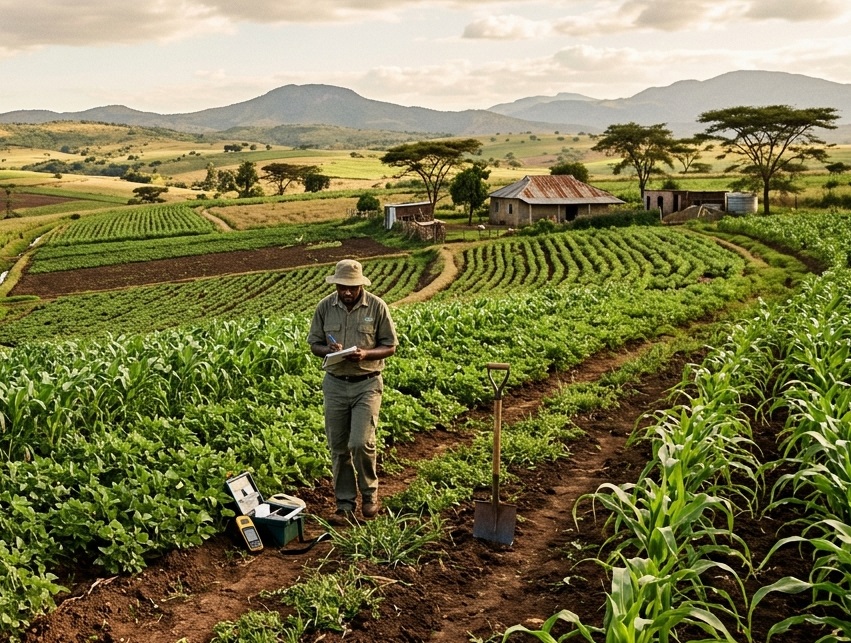
A successful farm starts with more than good planting material. Before selecting a crop, ordering seedlings, installing irrigation or investing in farm infrastructure, it is important to understand the land on which the enterprise will be established. This is where site and farm assessment comes in. A farm may appear suitable at first glance, yet important factors such as soil variability, drainage, water availability, slope, previous land use, accessibility and climate can significantly influence what can be produced and how profitably it can be produced. At UkulimaModern, site assessment forms part of a broader farm and project feasibility process designed to help farmers make informed decisions before committing significant resources. «Understand the site first. Then design the farm around it.» What Is a Site and Farm Assessment? A site and farm assessment is a structured evaluation of the physical, environmental and operational characteristics of a farm or proposed agricultural project. It helps answer practical questions such as: The assessment is therefore not simply a farm visit. It is the information-gathering stage that supports better farm design and management decisions. Why Assess a Farm Before Establishment? Agricultural investments can involve significant amounts of money. A farmer may invest in: If an important site constraint is discovered only after these investments have been made, correcting it can become expensive. A site assessment helps identify such issues earlier. For example, a proposed orchard may be affected by: Identifying these conditions early allows the farmer to adapt the project before establishment. The first part of an assessment should not necessarily be the soil. It should be the purpose of the project. Before examining the land, understand what the farmer wants to achieve. For example: The same piece of land can support different enterprises, but the appropriate choice depends on the farmer’s objectives and available resources. Important questions include: What is the expected scale? A one-acre family enterprise requires a different approach from a 20-acre commercial project. What is the investment capacity? Infrastructure and crop requirements must match available capital and working capital. What is the expected timeline? Annual crops, perennial crops and long-term agroforestry investments have very different financial timelines. Who will manage the farm? The technical requirements of an enterprise must be matched with management capacity. The location of a farm influences both production and business operations. During an assessment, consider: Accessibility becomes particularly important for commercial horticulture. A farm may produce a high-value crop, but poor road access can increase: Therefore: «Farm location is both a production consideration and a business consideration.» Walk the farm. Observe its shape and elevation. Important features include: Topography affects: A sloping farm, for example, may require additional measures to reduce erosion and manage water movement. A low-lying section may have different drainage characteristics from a higher section. This means a farm should not automatically be treated as one uniform production block. Water is essential for agriculture. But too much water in the wrong place can be just as problematic as too little water. Look for evidence of: Poor drainage can affect root development and increase the risk of certain crop problems. Before establishing a perennial crop such as an orchard, drainage conditions should therefore be understood carefully. Visual soil assessment can provide useful initial information, but it should not replace laboratory testing. Observe: These observations can help identify areas requiring further investigation. The next stage is representative soil sampling and laboratory testing. This is why site assessment naturally leads into our next technical guide: Soil Sampling, Testing and Analysis Laboratory results can provide information on characteristics such as: The results then need to be interpreted in relation to the intended crop and production system. Never assume that visible water automatically means adequate irrigation water. A proper assessment should consider: Source Where does the water come from? Possible sources include: Quantity Is enough water available for the proposed enterprise? Reliability Will the source remain available during dry periods? Quality Is the water appropriate for the crop and irrigation system? Distribution How will water move from the source to the crop? This may require: Where irrigation is planned, water quality assessment can be important because characteristics such as salinity and pH may affect crops and irrigation infrastructure. The current condition of the land is only part of the story. Ask about its history. Previous crops What has been grown on the land? Previous inputs Were fertilizers, herbicides or pesticides regularly applied? Livestock Has the land been used for grazing or livestock production? Previous problems Have farmers experienced: Land-use changes Has the land recently been cleared, cultivated or converted from another use? Farm history can provide clues that may not be visible during a single visit. Document what is already available. This can include: Then ask: «What can be retained, what needs improvement, and what needs to be built from scratch?» This prevents the project budget from being based on assumptions. One of the most useful outcomes of a good site assessment is recognising that not every part of the farm necessarily needs to be managed in exactly the same way. A farm can be divided into zones based on differences in: For example: Zone A: Well-drained, relatively level area Zone B: Sloping area requiring erosion management Zone C: Low-lying area with drainage concerns Zone D: Area requiring additional soil investigation Such zoning can later support: Even within the same broad geographical region, farm conditions can vary. Observe factors such as: For perennial crops, these considerations can influence long-term performance. Where relevant, historical climate and weather information should complement observations made during the farm visit. A common mistake is to decide on the crop first and then attempt to force the site to accommodate it. A better approach is: Understand the site → identify opportunities and constraints → evaluate possible enterprises → select the appropriate enterprise. Consider: Technical suitability Can the crop grow and perform adequately? Resource requirements Can the farm provide the required: Market opportunity Is there a realistic market? Financial requirement Can the farmer sustain the
Farm / Project Feasablitly
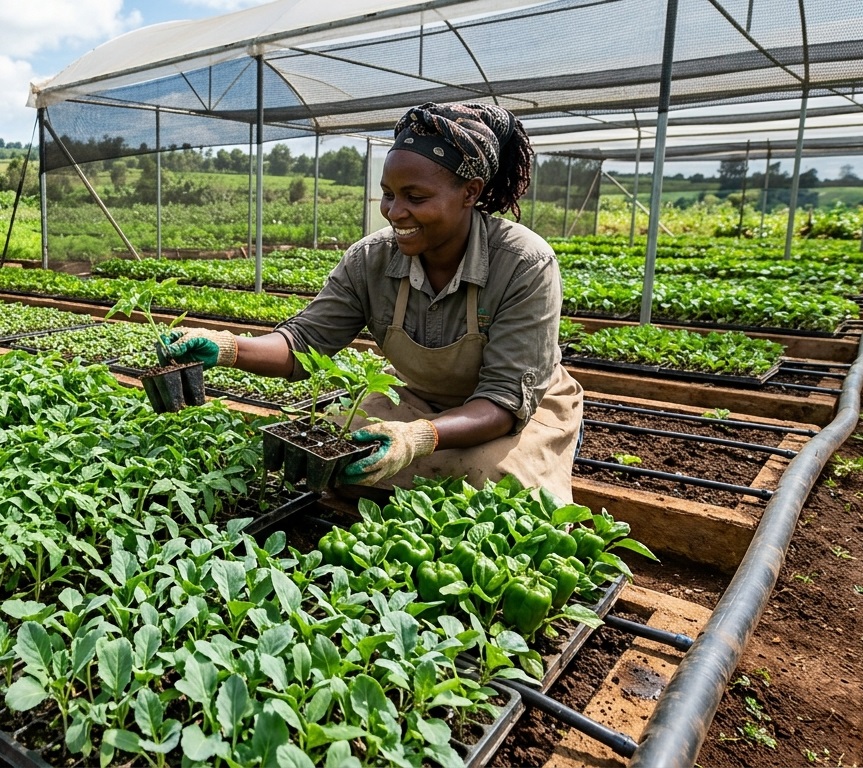
Project feasibility includes soil, water and site assessment before investment, follo farm planning and a cycle of Discover → Design → Visit → Support → Follow-up. Farm & Project Feasibility Before You Invest, Assess A practical guide to evaluating an agricultural enterprise before committing land, money and resources Introduction A farm project should not begin with a seedling order. It should begin with a question: «Is this farm, site and proposed enterprise actually suitable for what we intend to do?» Agriculture involves biological, environmental and financial uncertainty. Land may look productive but have hidden soil constraints. Water may be available but unsuitable for irrigation. A crop may have an attractive market but be poorly suited to the site’s climate. A farmer may have enough land but insufficient infrastructure, labour or working capital to manage the enterprise effectively. This is where farm and project feasibility assessment comes in. At UkulimaModern, feasibility is part of the process of understanding the farm before recommending what should happen on it. Our extension model begins by learning the farm — including soil, crops, water and farmer goals — before designing an appropriate intervention. The principle is simple: «Don’t start by asking, “What can I plant here?”Start by asking, “What does this site allow us to do sustainably and profitably?”» Farm feasibility is the process of assessing whether a proposed agricultural enterprise is technically, environmentally and economically viable under the conditions of a particular site. A feasibility assessment can be undertaken for: The assessment helps answer five fundamental questions: One of the most expensive mistakes in agriculture is starting before assessing. Farmers can spend significant amounts on: only to discover later that a fundamental constraint was overlooked. For example: A farmer may establish an orchard only to discover that the soil has a major fertility constraint. Another may install irrigation without adequately considering water quality or drainage. Another may select a crop because of its market price without adequately evaluating whether the local climate, soil, water and management requirements are suitable. Feasibility does not eliminate agricultural risk. It helps identify and manage risk before more money is committed. We can think of farm feasibility as six interconnected questions: SITE What is the land like? SOIL Can the soil support the proposed enterprise? WATER Is sufficient and suitable water available? CROP / ENTERPRISE Is the proposed enterprise appropriate for the site? MARKET Who will buy the output and under what conditions? MONEY Can the farmer finance establishment and manage the enterprise until returns begin? These are not independent questions. They interact. A crop may have a strong market but require irrigation that the farm cannot sustainably provide. A site may have excellent soil but poor market access. An enterprise may have good technical potential but require more working capital than the farmer can sustain. A good feasibility assessment therefore looks at the whole system. Before assessing the land, understand what the project is trying to achieve. Ask: A technically suitable project can still fail if it does not fit the farmer’s objectives, capacity or resources. The physical site is the foundation of the project. A basic site assessment should consider: Location Where is the farm? Consider: Topography Assess: Land history Understand what has previously happened on the land. Ask: Land history can reveal risks that are not immediately visible. Water is often treated simply as: «“There is a river.”» That is not enough. A proper assessment should consider: Availability Is water available throughout the production cycle? Quantity Is there enough water for the proposed enterprise? Reliability Will the source remain available during dry periods? Quality Is the water suitable for the intended crop and irrigation system? Infrastructure What will be required to: UkulimaModern’s agronomy services include water testing to assess irrigation water quality, pH, salinity and potential risks to irrigation infrastructure. This is where feasibility moves from visual observation to evidence. A basic soil assessment should eventually answer questions about: This is why soil sampling, testing and analysis comes immediately after the feasibility/site assessment stage in our knowledge series. A soil test can help determine what the soil currently contains and identify potential constraints, but the result still needs to be interpreted against the proposed crop and production objective. UkulimaModern’s current agronomy service includes laboratory soil analysis covering pH, EC, organic matter and macro- and micronutrient profiles. A crop does not grow in isolation from its environment. Consider: The question should not simply be: «“Can this crop grow here?”» It should be: «“Can this crop perform consistently here under the resources and management available?”» This distinction is particularly important for commercial projects. Only after understanding the site should crop or enterprise selection become a serious discussion. The assessment should consider: Site suitability + farmer objectives + available resources + management capacity + market opportunity + financial requirements. For example, two farmers may have similar acreage but completely different enterprise opportunities because their: are different. There is therefore no universally “best crop.” There is a more appropriate enterprise for a particular situation. Production without a market is a major business risk. Before establishing a commercial enterprise, investigate: Market feasibility should not mean simply asking: «“How much does this crop sell for?”» The more useful question is: «“Can this farm consistently produce a marketable product at a cost that allows the enterprise to remain viable?”» The project may require: Each requirement should be identified before establishment. UkulimaModern’s farm-planning service includes layout, field design, irrigation infrastructure design and cost budgeting. Agriculture is not simply about land. It is also about management. Ask: A farm can have excellent soil and good seedlings and still underperform because management is inadequate. This is where the project moves from: “Can we grow it?” to: “Can we afford to grow it?” Estimate: Establishment costs Operating costs Working capital How much money is required before the enterprise begins generating meaningful revenue? This is particularly important for perennial crops. An orchard may require substantial investment long before the farmer receives significant commercial returns. Every agricultural project
Crop Management: From Establishment to Harvest
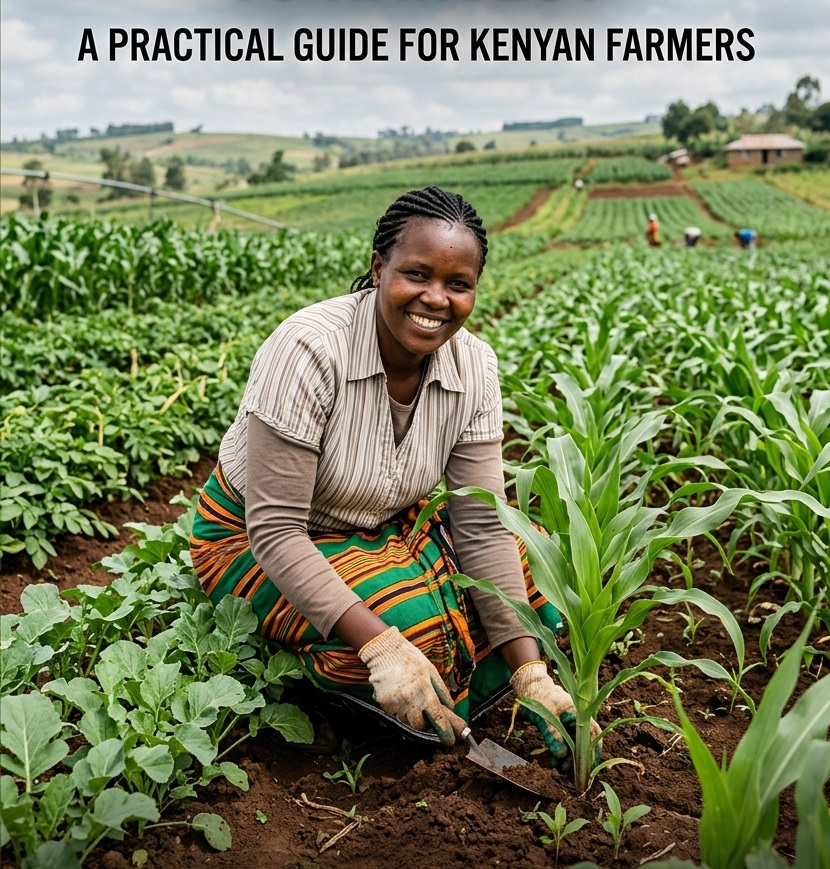
A practical agronomic framework for managing crops through the production cycle Crop management is more than planting, weeding and harvesting. It is the coordinated management of the crop, soil, water, nutrition, pests, diseases, environment, labour and farm records throughout the production cycle. At UkulimaModern, crop management sits at the intersection of Extension and Agronomy. Our current agronomy services include crop nutrition, fertility management, spray programmes, Integrated Pest Management, crop monitoring, irrigation management and crop calendars. Our extension model then connects these technical decisions to what is actually happening on the farm. The result is a simple principle: Manage the crop according to its stage, its environment and its actual needs. Good crop management begins before planting. The first question is not: “How do I manage this crop?” It is: “Is this crop suitable for this site?” Consider: For perennial crops, this decision becomes even more important because the farmer may be committing land and resources for many years. KALRO’s avocado training, for example, treats site selection, variety selection, soil and water management, pest and disease management and climate-smart practices as interconnected components of avocado production. Crop management begins with establishment. For fruit crops, the quality of the seedling affects the starting point of the orchard. Consider: KEPHIS states that nurseries producing seedlings for distribution or sale are subject to certification requirements intended to ensure clean, high-quality and true-to-type planting material. UkulimaModern similarly positions healthy, grafted and disease-free planting material as the starting point for farm success. A crop can be healthy in the nursery and still struggle after transplanting. Establishment therefore requires attention to: For orchard crops, spacing also affects future canopy development, light interception, air movement, access and management. UkulimaModern’s orchard-establishment service includes land preparation, hole preparation, spacing, organic soil enrichment and precision planting. The soil is the crop’s root environment. Good crop management therefore requires understanding it. A practical soil assessment can include: UkulimaModern’s soil-testing service uses these parameters to inform fertility and nutrition decisions. The objective is not simply to obtain numbers. The objective is to turn numbers into decisions. A crop does not have exactly the same nutritional requirements throughout its life. The management programme should therefore consider: Establishment → Vegetative growth → Flowering → Fruit set → Fruit development → Maturity The exact programme depends on the crop and production system. For example, UkulimaModern’s public crop-management guidance for apples emphasises balanced nutrition during flowering and fruit development, alongside pruning, irrigation and crop protection. This illustrates an important principle: Nutrition should be connected to crop physiology and growth stage. Do not automatically apply the same product, rate and frequency throughout the season. Water management is crop management. The aim is to maintain suitable moisture around the root zone while avoiding prolonged saturation. Monitor: UkulimaModern includes water testing, irrigation scheduling, drip-line design and fertigation within its agronomy services. KALRO’s avocado programme similarly treats water and irrigation management as a specific component of crop management. Regular scouting is one of the most important crop-management activities. Look systematically for: Record: What? Where? When? How much? Then investigate the cause. This is the foundation of IPM. FAO recommends combining prevention, monitoring, biological and cultural approaches and targeted chemical intervention rather than relying primarily on routine pesticide use. Evidence from Kenyan mango production has also associated adoption of multiple IPM practices with higher yields and net income alongside reduced insecticide use and lower reported environmental and health impacts. When chemical intervention is justified, responsible application matters. Before applying a product: Do not use questionable or expired products simply because they are already in the farm store. A recent UkulimaModern farm assessment identified concerns around questionable packaging and labelling, expired products, poor storage and inadequate worker training. Kenya’s agricultural IPM framework also emphasises secure storage, inventory management, resistance management and avoiding inappropriate pesticide use. For fruit crops, canopy management can influence: Pruning and training should therefore be based on the crop’s growth habit and production objective. UkulimaModern’s orchard-management services specifically include pruning, while its published apple-management guidance connects pruning and training with canopy structure, sunlight exposure and fruiting. The principle is: Do not wait for an unmanageable canopy before beginning canopy management. Weeds compete with crops for: They can also provide habitats for pests and complicate field operations. But weed management should consider the wider farm system. Depending on the crop and situation, management may involve: The objective is not necessarily a completely bare field. The objective is manageable competition and a healthy production environment. Sustainable crop management can incorporate practices that improve resource use and reduce unnecessary dependence on external inputs. Examples include: Research from Kiambu and Makueni demonstrates the value of considering soil, water and IPM together and adapting practices to local farmer circumstances. This is consistent with UkulimaModern’s broader focus on sustainable and climate-smart farming. There is a difference between looking at a crop and monitoring it. Monitoring involves tracking change. Record: UkulimaModern’s agronomy service includes regular field evaluations, scouting reports and physiological checks specifically to identify risks early and track crop development. A crop calendar helps organise activities around the crop’s development. It can include: Crop stage| Key management areasEstablishment| Planting, watering, protectionVegetative growth| Nutrition, weeds, canopy developmentPre-flowering| Nutrition, irrigation, pest monitoringFlowering| Water, nutrition, disease and pest monitoringFruit set| Nutrition, moisture, pest protectionFruit development| Nutrition, irrigation, crop protectionMaturity| Harvest readiness, quality managementPost-harvest| Sanitation, records, market handling UkulimaModern’s agronomy service includes customised crop calendars covering activities such as land preparation, planting, weeding, pruning, feeding and harvesting. A calendar should guide management—not replace observation. Crop management does not end when the fruit reaches harvest maturity. Harvest timing affects quality. KALRO’s avocado training, for example, includes harvesting at appropriate maturity and post-harvest handling to protect fruit quality and dry matter requirements. Farmers should therefore consider: The objective is to protect the value created throughout the production cycle. After harvest, ask: What worked? What failed? What cost more than expected? Which pests or diseases were significant? Did the nutrition programme perform as expected? Was irrigation adequate? What did the soil and
More Than a Seedling: Building an Orchard From the Ground Up
A UkulimaModern Case Study on Connecting Planting Material, Farm Planning and Agronomy An orchard does not begin when the seedling is planted. It begins much earlier. It begins with a question: What are we trying to establish, where are we establishing it, and what will the farm need to remain productive for years to come? This is the thinking behind UkulimaModern’s approach to orchard establishment. A farmer may purchase a healthy grafted fruit seedling, but the quality of that seedling is only one part of the equation. Site conditions, soil, water, spacing, planting technique, nutrition, pest management, canopy development and subsequent monitoring all influence what happens after the tree leaves the nursery. For UkulimaModern, this is why the work does not stop at selling a seedling. The objective is to help the farmer establish the right crop, in the right place, in the right way—and continue supporting it after planting. Starting With the Right Planting Material The first decision is the planting material. Different fruit crops and varieties have different requirements, market opportunities and environmental adaptations. UkulimaModern’s nursery offering includes grafted fruit trees alongside tissue-culture bananas, herbs, vegetables and agroforestry trees. The company’s current positioning emphasises selecting planting material according to performance and local conditions. For an orchard farmer, this means considering: – Crop and variety – Intended market – Site suitability – Climate – Soil conditions – Water availability – Expected management requirements – Availability of technical support – Quality and traceability of planting material A seedling should therefore not be selected in isolation from the farm. The Farm Comes Before the Orchard Before establishing an orchard, the land needs to be understood. UkulimaModern’s extension approach begins with Discover—learning about the farmer’s soil, crops, water and goals—before moving into design and field implementation. A site assessment can consider: Soil – Soil type – Soil depth – Drainage – pH – Electrical conductivity – Organic matter – Nutrient status – Potential physical limitations Water – Availability – Reliability – Quality – Irrigation requirements – Distribution across the proposed orchard Terrain – Slope – Erosion risk – Drainage patterns – Accessibility – Field layout Climate – Rainfall pattern – Temperature – Wind exposure – Potential climatic stresses Farmer objectives – Commercial or subsistence production – Target market – Available labour – Investment capacity – Expected production timeline This assessment helps move the farmer from “I want to plant fruit trees” to “I understand what this site can realistically support.” Soil Is Part of the Orchard Design An orchard can remain on the same piece of land for many years. That makes the initial soil assessment particularly important. UkulimaModern’s agronomy service includes laboratory soil analysis covering parameters such as pH, EC, organic matter and macro- and micronutrients. The results are then used to inform crop nutrition and fertility management. The purpose of testing is not simply to produce a laboratory report. The important question is: What does the result mean for the orchard? A soil result can influence decisions around: – Crop suitability – Soil amendments – Basal nutrition – Liming where required – Organic matter management – Fertilizer selection – Nutrient correction – Irrigation and salinity considerations This is where soil science becomes practical agronomy. Designing the Orchard Before Planting Once the site has been assessed, the physical orchard can be planned. This can include: – Orchard boundaries – Row orientation – Plant spacing – Access paths – Water infrastructure – Drainage – Wind protection – Service areas – Future expansion – Harvest access UkulimaModern’s orchard-establishment service specifically includes land preparation, hole digging, spacing, organic soil enrichment and precision planting. Planning before planting reduces the likelihood of making expensive corrections later. Spacing Is a Management Decision Spacing is sometimes treated as simply measuring the distance between trees. It is much more than that. Spacing influences: – Canopy development – Light penetration – Air movement – Root competition – Access for farm operations – Pruning requirements – Pest and disease management – Irrigation layout – Harvesting – Long-term orchard management A high-density system may require a different level of pruning and management from a wider-spaced orchard. Therefore, spacing should be selected according to the crop, variety, site, management system and farmer’s objectives—not simply copied from another farm. Preparing the Planting Site Good orchard establishment requires more than digging a hole and placing a seedling inside it. Site preparation can involve: 1. Clearing or controlled vegetation management 2. Setting out the orchard 3. Establishing drainage where necessary 4. Marking planting positions 5. Preparing planting holes 6. Incorporating appropriate organic materials or amendments 7. Preparing irrigation infrastructure 8. Checking planting material 9. Planting 10. Supporting newly established trees The objective is to create an environment in which the young tree can establish its root system without unnecessary constraints. Planting Is a Precision Operation A young tree is vulnerable during establishment. Planting therefore needs attention to details such as: – Correct planting depth – Healthy root system – Proper soil contact – Avoiding damage to the stem – Appropriate watering – Mulching where suitable – Protection from livestock and physical damage – Weed management – Early pest and disease scouting The tree should establish progressively rather than being subjected to avoidable stress immediately after planting. The Orchard Does Not End at Planting One of the most important lessons from orchard establishment is that planting is only the beginning. After establishment comes management. UkulimaModern’s orchard-management approach includes nutrition, irrigation, pruning, pest management, weed management, record keeping and integrated pest management. This creates a continuum: Seedling → Establishment → Vegetative growth → Canopy development → Flowering → Fruit development → Harvest → Renewal Each stage presents different management requirements. Building the Nutrition Programme Young trees require an appropriate nutritional environment for establishment and growth. But nutrition should not be based simply on applying more fertilizer. It should be connected to: – Soil-test results – Crop requirements – Tree age – Growth stage – Soil condition – Moisture availability – Previous applications – Observed crop performance UkulimaModern’s
From a Farm Photo to an Agronomic Conversation
How UkulimaModern Is Using Digital Extension to Bring Farm Advisory Closer to Farmers A farmer does not always need to wait for the next farm visit to ask a question. A leaf begins changing colour. A fruit develops an unusual mark. A pest appears suddenly. A young seedling stops growing. A farmer notices something unusual and wants to know: “What is happening to my crop?” Traditionally, getting technical advice could mean waiting for a field officer, travelling to an extension office or scheduling a farm visit. Digital extension changes that starting point. At UkulimaModern, digital support has become part of the way farmers can connect with agricultural advisory services—using familiar tools such as WhatsApp, photographs and short videos to begin the diagnostic conversation. The current UkulimaModern extension service specifically provides WhatsApp advisory, photo/video issue diagnosis and remote agronomy check-ins. The Idea Behind E-Extension E-extension does not mean replacing the farm visit. It means making expert agricultural support more accessible between visits—or when a physical visit is not immediately practical. The basic principle is simple: Farmer observes → Farmer shares → Agronomist assesses → Advice is provided → Farmer acts → Follow-up happens A smartphone therefore becomes more than a communication device. It can become the first connection between a field problem and technical support. A Typical Farmer Question Imagine a farmer notices unusual spots developing on avocado leaves. Instead of immediately buying a fungicide, the farmer can share: – Clear photographs of the affected leaves – A wider photograph showing the plant – A photograph of the surrounding crop – A short video showing the general condition of the block – Information about the crop and variety – Crop age or growth stage – When the problem was first noticed – Recent weather conditions – Irrigation practices – Recent fertilizer or pesticide applications The agronomist then has more information with which to begin the assessment. The conversation moves from: “My avocado has spots. What should I spray?” to: “Let’s first understand what is happening.” That is an important difference. Diagnosis Before Recommendation One of the principles behind UkulimaModern’s extension model is that advisory support should begin with understanding the farm. The company’s current extension cycle is structured around five stages: Discover → Design → Visit → Support → Follow-up. Digital extension strengthens particularly the Support and Follow-up stages. It can also help with the initial Discover stage by allowing technical teams to gather information before a physical assessment. Not Every Crop Problem Can Be Diagnosed From a Photograph This is an important limitation. A photograph can reveal useful visual information, but it cannot always establish the cause of a crop problem. Similar symptoms can have very different causes. For example, yellowing leaves may be associated with: – Nutrient deficiencies – Root problems – Water stress – Poor drainage – Pest damage – Disease – Soil constraints – Chemical injury – Natural crop physiology A photograph may help narrow down the possibilities. But where necessary, further investigation may involve: – Additional photographs – Video – Farm history – Soil testing – Water testing – Physical farm inspection – Pest or disease identification – Input and spray records – Crop monitoring Digital extension should therefore be viewed as a diagnostic gateway, not a substitute for agronomic investigation. The Right Photograph Matters One of the simplest ways farmers can improve digital diagnosis is by improving the quality of information they send. A useful crop-diagnostic submission should avoid sending dozens of unrelated photographs. Instead, focus on the problem. A practical photo sequence Photo 1 — The affected plant Show the whole plant or tree. Photo 2 — The affected part Move closer to show the leaves, fruit, stem or other affected area. Photo 3 — The symptom Capture the detail clearly. Photo 4 — The surrounding situation Show whether neighbouring plants are affected. Where appropriate, a short video can provide additional context. The objective is not to send more images. It is to send better information. One Crop Problem at a Time Digital advisory becomes much more effective when the farmer isolates the issue. Instead of sending: «“My farm has many problems. Please advise.”» A better submission might be: «“Hass avocado, approximately three years old. The lower leaves have developed yellowing during the last two weeks. Irrigation is through drip lines. No recent pesticide application. I have attached four photographs and a short video.”» That gives the agronomist a starting point. The clearer the question, the easier it becomes to structure the investigation. From WhatsApp to Agronomic Decision-Making The technology itself is not the most important part. The important part is what happens after the message is received. A useful digital advisory process can follow this pathway: 1. Receive The farmer submits the crop information. 2. Clarify The technical team asks additional questions where information is missing. 3. Assess The available visual and farm information is examined. 4. Diagnose Possible causes are narrowed down. 5. Recommend The farmer receives practical actions appropriate to the situation. 6. Escalate If the problem cannot be reliably resolved remotely, a physical farm visit, soil test, water test or other investigation may be recommended. 7. Follow up The farmer provides an update after implementing the agreed intervention. This creates a feedback loop rather than a one-way answer. Why Follow-Up Matters Suppose an agronomist identifies a likely nutritional problem and recommends corrective action. The conversation should not necessarily end there. A follow-up question might be: “What changed after the intervention?” The farmer can then provide updated photographs or observations. This creates an important learning cycle: Observation → Advice → Action → Response → Reassessment Over time, this can also create a better understanding of the farm. Digital Extension Can Reduce Unnecessary Input Use One of the risks in farming is treating every visible symptom with an input. A farmer sees a damaged leaf and immediately buys a pesticide. Another sees yellow leaves and immediately buys fertilizer. Another sees poor growth and changes several products at once. Digital extension provides
When A Farm Visit Revealed More Than A Crop Problem
A Farm Diagnostic Case Study on Agrochemical Stewardship, Farm Safety and Practical Extension A farm visit is rarely just about looking at the crop. Sometimes, the most important problems are not visible in the field. They may be inside the farm store, hidden in input records, embedded in routine practices, or linked to gaps in the knowledge of the people handling farm inputs. This was the experience during a recent UkulimaModern farm visit. What began as a routine advisory engagement revealed several issues around agrochemical identification, expiry management, storage and worker training. The case demonstrated an important principle behind the UkulimaModern approach: Good agricultural extension does not begin with recommending an input. It begins with understanding the farm and diagnosing the problem. The Farm Visit The objective of the visit was to assess the farm situation and provide practical agricultural guidance. As part of the assessment, attention was not limited to the crop. The farm store, agrochemical handling practices and the knowledge of workers responsible for farm operations were also considered. This broader assessment revealed several concerns. These included: – Agrochemicals with questionable packaging and labelling, raising concerns about authenticity. – Products that had passed their expiry dates but were still stored alongside active farm inputs. – Storage practices that exposed workers and products to unnecessary risks. – Farm workers who had not received formal training on safe agrochemical handling. – Gaps in knowledge around dosage calculations and checking expiry dates. These observations were documented as farm-management concerns requiring attention. The Problem Was Bigger Than the Product It is easy to assume that a crop protection problem is simply a pest or disease problem. But the effectiveness of crop protection can also depend on what is being applied, how it is stored, whether it is within its usable period, how it is mixed and whether the person applying it understands the label instructions. This creates a chain: Diagnosis → Product selection → Product verification → Correct dosage → Safe handling → Correct application → Monitoring A weakness at any point can compromise the entire process. For example, applying an unsuitable product to a correctly diagnosed pest does not solve the problem. Likewise, having the correct product but using an incorrect dosage, poor storage conditions or an expired product can undermine the intended intervention. Looking Beyond the Crop One of the key lessons from the visit was the importance of looking at the entire farm system. A practical farm diagnostic should consider: 1. The crop What is happening? – What symptoms are present? – Which part of the plant is affected? – How widespread is the problem? – At what growth stage did it appear? – Is the problem increasing or stabilising? 2. The environment What conditions may be contributing? – Soil condition – Weather – Moisture – Drainage – Irrigation – Canopy conditions – Field sanitation 3. Farm inputs What is being used? – Fertilizers – Foliar products – Biostimulants – Fungicides – Insecticides – Herbicides – Biological products 4. The farm store How are inputs managed? – Are products clearly labelled? – Are expiry dates checked? – Are products stored appropriately? – Are incompatible products separated? – Are damaged or questionable containers isolated? – Are records maintained? 5. The people Who is responsible for application? – Have they been trained? – Do they understand labels? – Can they calculate application rates? – Do they understand protective equipment? – Do they know what to do with expired or suspicious products? This is where agricultural extension becomes more than information delivery. It becomes farm management support. Corrective Action Starts With Verification Where an agrochemical appears questionable, the appropriate response is not to assume its authenticity simply from appearance. The first step is verification. Farmers should check: – Product name and formulation – Manufacturer details – Packaging and seals – Label information – Batch or registration information where applicable – Expiry date – Source of purchase – Relevant registration or regulatory information Suspicious products should not simply be applied because they are already in the farm store. Where authenticity or legality is in doubt, the farmer should seek verification from the appropriate regulatory authorities or qualified professionals. Expired Products Should Not Be Treated as Normal Stock An expired product should not remain mixed with active farm inputs as though it were available for routine use. A basic farm-store management system should distinguish between: Active stock Products that are correctly identified, within their usable period and appropriately stored. Quarantined stock Products requiring verification or further action. Expired stock Products that have passed their expiry date and require appropriate disposal in accordance with applicable requirements. This simple separation can prevent accidental application. Improving Farm Chemical Storage A farm store is part of the production system. It should provide a controlled environment where agricultural inputs can be identified, protected and managed responsibly. Good practice includes: – Keeping products in their original labelled containers. – Keeping the store secure and inaccessible to unauthorised persons. – Keeping agrochemicals away from food, animal feed and other incompatible materials. – Maintaining appropriate ventilation and protection from environmental exposure. – Keeping products organised and clearly identifiable. – Regularly checking expiry dates. – Maintaining an inventory of products. – Removing damaged or questionable containers from normal stock. – Providing appropriate protective equipment and safe handling procedures. Storage management is not simply about keeping products tidy. It is about reducing avoidable risks while protecting the integrity of farm inputs. The Human Factor Perhaps one of the most important findings from the visit was the training gap. Farm workers are often the people who spend the most time handling agricultural inputs. Yet a farm may invest heavily in crop protection products without investing equally in the people applying them. Training should cover practical areas such as: – Reading and understanding product labels. – Measuring and calculating application rates. – Safe mixing procedures. – Appropriate personal protective equipment. – Safe transportation and storage. – Recognising expired products. – Responding to spills. – Maintaining